Everybody sells the word insulated. Almost nobody sells the millimetre.
Custom Insulated Bags makes grocery totes, thermal delivery bags, shipping mailers, foil-lined promotional bags, catering carriers and specimen transport bags — quoted by foam type, foam thickness, liner material and seam.
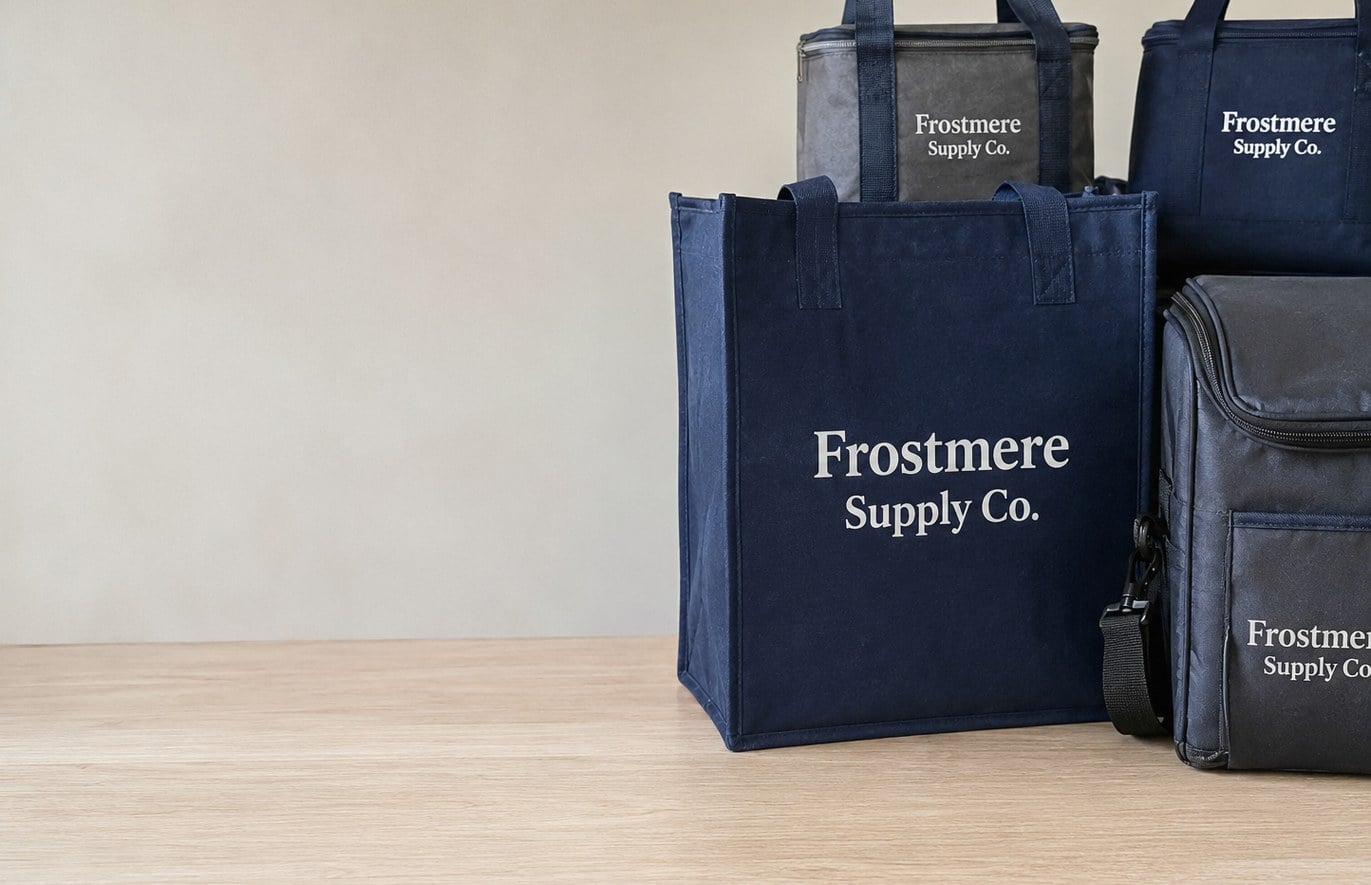
Nobody buys an insulated bag on the specification. They buy it because a photograph looked right and a price looked reasonable, and the two bags in the two photographs were not the same bag at all.
One had eight millimetres of closed-cell foam in the panel. The other had a shiny foil liner and almost nothing behind it. Both were sold as insulated, because the word is not defined and nobody is required to define it.
So the shopping arrives warm, the delivery bag leaks into its own foam within a month, and the reorder feels different from the first run. None of that is bad luck. All of it is a number nobody wrote down.
Why we exist
An insulated bag is decided by four things: what the foam is, how thick it is, what the liner is made of, and whether that liner is welded or stitched. None of the four appears on a normal quote.
All four appear on ours, before anything is made, and none of them costs more to get right than to get wrong.
Why we will not quote you an hours figure
A bag adds no heat and removes none. It slows a transfer that has already started, and how long it slows it for is decided mostly by things that are not the bag: how cold or hot the contents were when they were loaded, how much ice or thermal mass travels with them, how full the bag is, the ambient temperature and how many times it is opened.
The same bag genuinely holds for eight hours in a cool van and ninety minutes in a hot one. Any supplier printing a fixed hours claim on a bag is quoting a laboratory, not your route. We would rather tell you what the bag is and let you test it on the run you actually do.
Foam is the insulation. Foil is a mirror.
Closed-cell polyethylene foam resists conduction, and it works by thickness — 4mm, 6mm, 8mm and 10mm are genuinely different products, and you can feel the difference instantly because a thick panel stands square while a thin one folds limp.
Reflective foil is a radiant barrier. It is useful and it is a film. A foil-lined bag with 2mm of foam behind it is a thin bag with a shiny lining, and it is sold in the same photographs as a bag three times its price. Ask for the millimetre figure and the confusion disappears.
Stitched liners leak. Welded liners do not.
A stitched liner has thousands of needle holes in it. The first sauce spill goes through the holes, into the foam, and never comes out — which is why a delivery bag that smells faintly of last month has usually been leaking into its own panels for weeks.
A heat-sealed or RF-welded liner is a continuous surface. It holds the spill in a tray you can actually wipe. On anything carrying food we treat it as the default rather than as an upgrade.
The face material chooses the print method
Most insulated bags are faced in non-woven polypropylene, and PP distorts well below a normal cure temperature — which is why so many promotional bags arrive with a wrinkled print under a large solid. A lower cure with a longer dwell fixes it.
Laminated faces need a controlled heat transfer, and dye sublimation needs polyester to bond into, so it will not work on a metallised or PP face at all. Embroidery needs a backing panel, because a needle through a liner is a hole in a liner. We pick the method against the face and tell you which one we used.
What we will talk you out of
A thicker panel when the real problem is headspace. A machine-washable claim on anything with foam in it. A full-bleed solid on a low-melt polypropylene face. An hours figure on a printed panel.
And any use of a soft bag as a controlled cold chain. A regulated storage range needs a qualified shipper with a validated pack-out and a temperature logger that produces a record. That is a system, not a bag, and we will say so and point you at the right packaging rather than take the order.
How we work
ASK
What goes in, how far it travels, and how it gets cleaned.
SPEC
Foam type, thickness in mm, liner material and seam type.
FIT
Sized to your pans, crates or boxes, because headspace beats foam.
MOCK
Free mockup within 24 hours, printed for the actual face material.
SHIP
About 2 weeks, with the real date confirmed in writing before you commit.
Who we serve
Get in touch
Text or call George at (929) 605-4397, or email info@custominsulatedbags.com. Free mockups, low minimums, and a lowest-price guarantee.
Win Free Stuff
Enter below for a chance to win plus receive 10% off your first order.
🎉 You are in!
We will text you your 10% off code. Good luck!